CALIBRATION BENCH
Welder calibration, documented for your QC audit
Your welder is measured and adjusted with specialised tools, then documented for quality control audits and project specs. On site in our mobile area.
Chapter 01
Why a welder's output drifts, and what it costs on a spec job
A welder does not have to break to be wrong. Meters wander, internal connections age, and a machine that has worked hard through a few Peace Country seasons can sit a little off what its dial says and still strike an arc that looks fine to the eye. The operator trusts the setting on the front panel. The weld is made to a number the machine is no longer delivering.
On a hobby project that is a nuisance. On a project with a written procedure it is a liability. Output that is off the specified setting shows up later as rework, wasted consumables, a rejected joint, or an inspector asking what proof you have that the machine was running where the paperwork says it was. The cost of that question is almost always higher than the cost of checking the machine first.
That is the gap calibration closes. It replaces an assumption about the machine with a measurement of it, taken by people who service Miller and Lincoln equipment at our Grande Prairie shop.
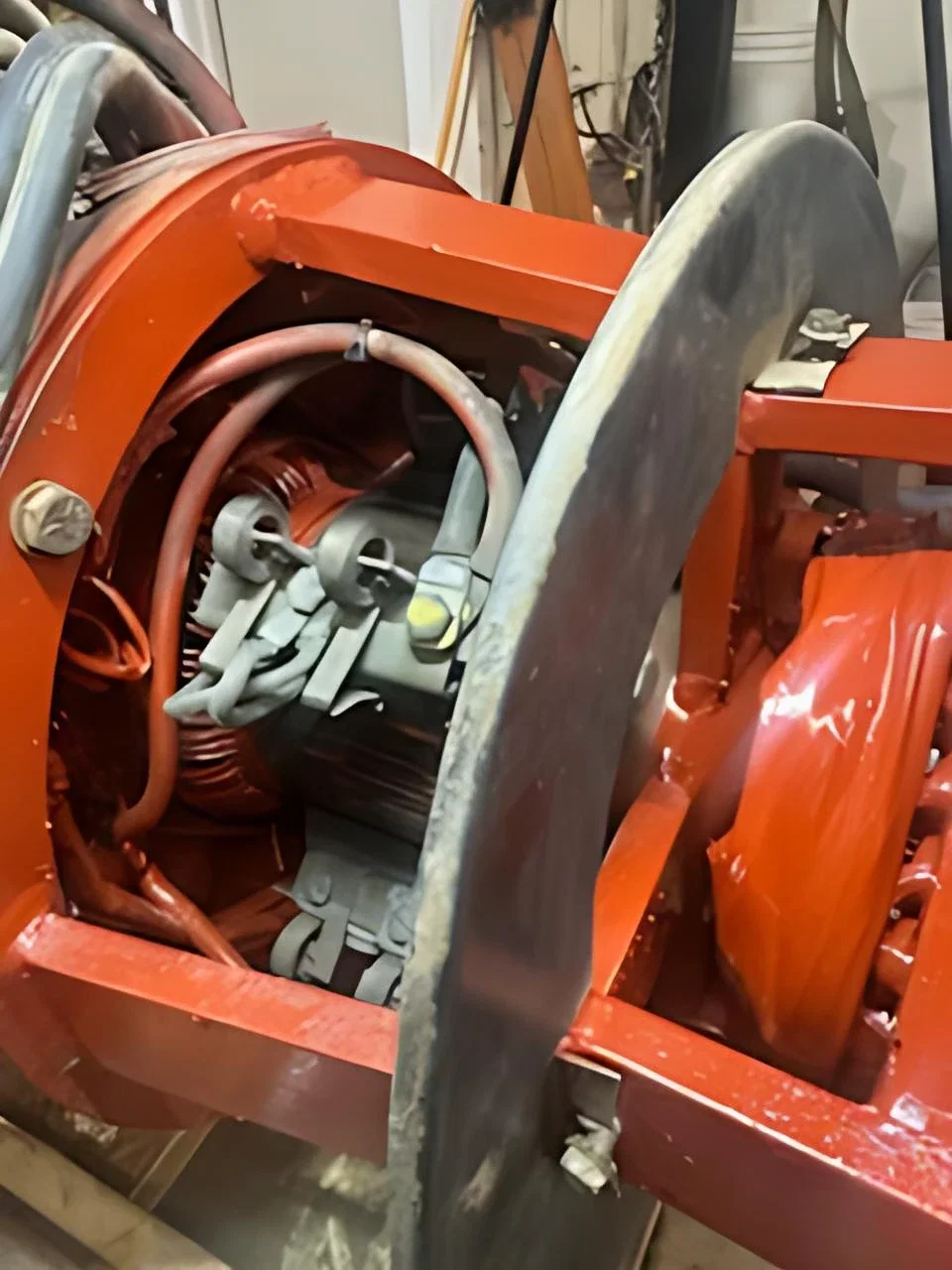
Red engine-driven generator end and rotor close-up on the shop floor at the Grande Prairie shop
Measured and adjusted with specialised tools
We do not eyeball it. Calibration here means putting the machine under measurement with specialised measuring and adjusting tools, comparing what it actually delivers against what it is set to deliver, and bringing it back into line where it has wandered. Where the reading and the setting disagree, the technician adjusts until they agree, then checks again. A calibration is only finished when the machine has been measured a second time and the numbers hold, because an adjustment nobody has verified is just another guess.
Because our crew are licensed electricians and heavy-duty mechanics, the work does not stop at the display. If a reading will not hold because of a worn connection, a failing component or an engine that is not holding its speed on an engine-driven unit, we can trace it and repair it in the same visit, instead of sending you away with a number you cannot trust.
The result is a machine you can set once and believe: pinpoint accuracy on the output you are paying a welder to lay down, and one less variable to chase when a weld goes wrong. When the machine is known to be right, the conversation about a bad weld can move straight to technique, materials and procedure, which is where it belongs.
Chapter 03
Paperwork that holds up at a QC audit, on site across the Peace Country
Accurate is half of it. The other half is being able to show it. Every calibration comes with formal documentation written for quality control audits and project specs, so when an auditor or a client asks how you know your equipment is in order, the answer is a document, not a promise. That is how you stay compliant on every project and protect the investment you have already made in your machines.
If pulling a welder off a site or out of a fabrication yard means pulling a crew off the job, we come to you. Our mobile team calibrates on site across the Peace Country, from Grande Prairie and Sexsmith to Beaverlodge, Valleyview, Spirit River and Wembley, and the shop at Unit 17 102, 11231-97 Ave is there for machines that are easier to bring in.
Tell us the make and model, what the job requires, which documents your auditor or client expects to see, and where the machine is. Appointments are available via email at Rosset.cam@gmail.com, or call (780) 978-9004 and we will set a time.
Pinpoint accuracy, stay compliant, protect your investment, expert hands. Appointments available via email at Rosset.cam@gmail.com or call (780) 978-9004.