Restore or Replace? How to Decide on an Old Miller or Lincoln
Before you write off an older machine, find out what is actually wrong with it and what it would take to bring it back.
October 6, 2026 · 4 min read
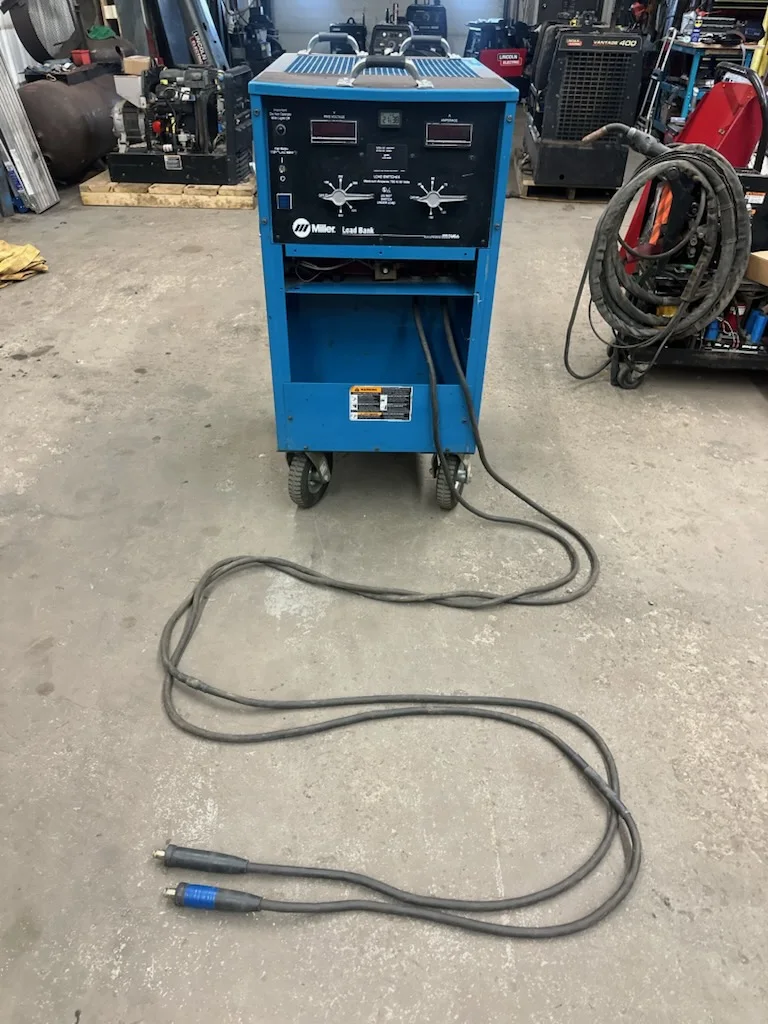
Every shop and every field crew eventually has the same conversation about an older welder. It still runs, mostly. It has given you a lot of hard use. Something has started to go wrong and someone says it is time to buy a new one. Sometimes that is the right call. Often it is made without knowing what is actually wrong with the machine, and that is where money gets wasted in both directions.
Why older Miller and Lincoln machines are worth a second look
Many older Miller and Lincoln machines were built heavy and built to be serviced. The frames are solid, the major assemblies are accessible, and the engines on engine-driven units are usually the kind a heavy-duty mechanic can rebuild rather than throw away. A machine like that can have a lot of life left in it even when it looks tired on the outside.
The other thing an old machine has going for it is familiarity. Your operators know how it behaves. It is already set up on the cart or the truck. It already fits the way you work. Replacing it means a new learning curve and sometimes new accessories and mounting too.
When restoration usually makes sense
- The frame, housing and major assemblies are sound, and the problems are in wear items, electrical components or the engine.
- The machine does exactly the job you need and you do not want to change processes or output.
- Parts and service information are still available for the model.
- The unit is a good fit for how you use it, such as a truck-mounted or skid-mounted engine-driven unit that would be awkward to replace.
- Downtime on a new purchase, waiting on delivery and setup, would cost you more than a planned rebuild.
When buying new is the honest answer
Restoration is not always the answer, and a shop that tells you otherwise is not helping you. If the frame or housing is cracked or badly corroded, if key parts for the model can no longer be sourced, or if your work has changed so much that the machine no longer suits it, a new unit may be the better investment.
A diagnostic is how you find out. We would rather tell you straight that a machine is past saving than rebuild something that will let you down again. Our approach is the same either way: find the real problem first, then talk about options.
What a full restoration involves
A proper restoration is more than swapping the part that failed. The aim is to return the machine to the performance it was built to deliver. In our shop that means working through the whole machine:
- Root-cause diagnostics that check every circuit and every mechanical part, so the fault you noticed is not just the first of several.
- Replacement of worn components rather than patching them.
- A deep internal clean to clear out years of dust, grinding debris and moisture.
- Full mechanical repairs and, where the unit has an engine, a complete engine overhaul.
- Safety and performance testing before the machine goes back to you.
The testing at the end matters as much as the repair. A machine that has been rebuilt and never properly load-tested is a guess. One that has been run and verified is something you can put straight back to work.
Questions to ask before you decide
Whoever you take it to, a few questions will tell you a lot. What exactly is wrong, and how do you know? What will be replaced and what will be reused? Is the engine being overhauled or just serviced? How will the machine be tested before it comes back? A shop that answers clearly and specifically is a shop that has done this before.
Also think about what you are comparing. A restored machine returns to like-new performance, but it is still your machine. A new machine brings a fresh start along with a different set of controls, different accessories and its own break-in. Neither is wrong. The right answer depends on the state of your unit and the work you need it to do.
Bring it in for a straight answer
We are licensed electricians and heavy-duty mechanics, and an authorized warranty service provider for Miller and Lincoln welders, so we see the inside of these machines every week. If you are not sure whether yours is worth saving, bring it to our shop at Unit 17 102, 11231-97 Ave in Grande Prairie, or ask about our mobile service.
Call (780) 978-9004 or email Rosset.cam@gmail.com to book an appointment, and we will tell you what we find.
1st Choice Welder & Generator Service and Repair, (780) 978-9004
Call (780) 978-9004More articles
Signs Your Welder Needs Repair Before It Quits on the Job
Welders rarely die without warning, and the crews that act on the early signs are the ones who stay on schedule.
Why Welder Calibration Matters for Quality and Audits
A welder that looks fine can still be delivering something different from what the dial says.