Signs Your Welder Needs Repair Before It Quits on the Job
Welders rarely die without warning, and the crews that act on the early signs are the ones who stay on schedule.
October 6, 2026 · 4 min read
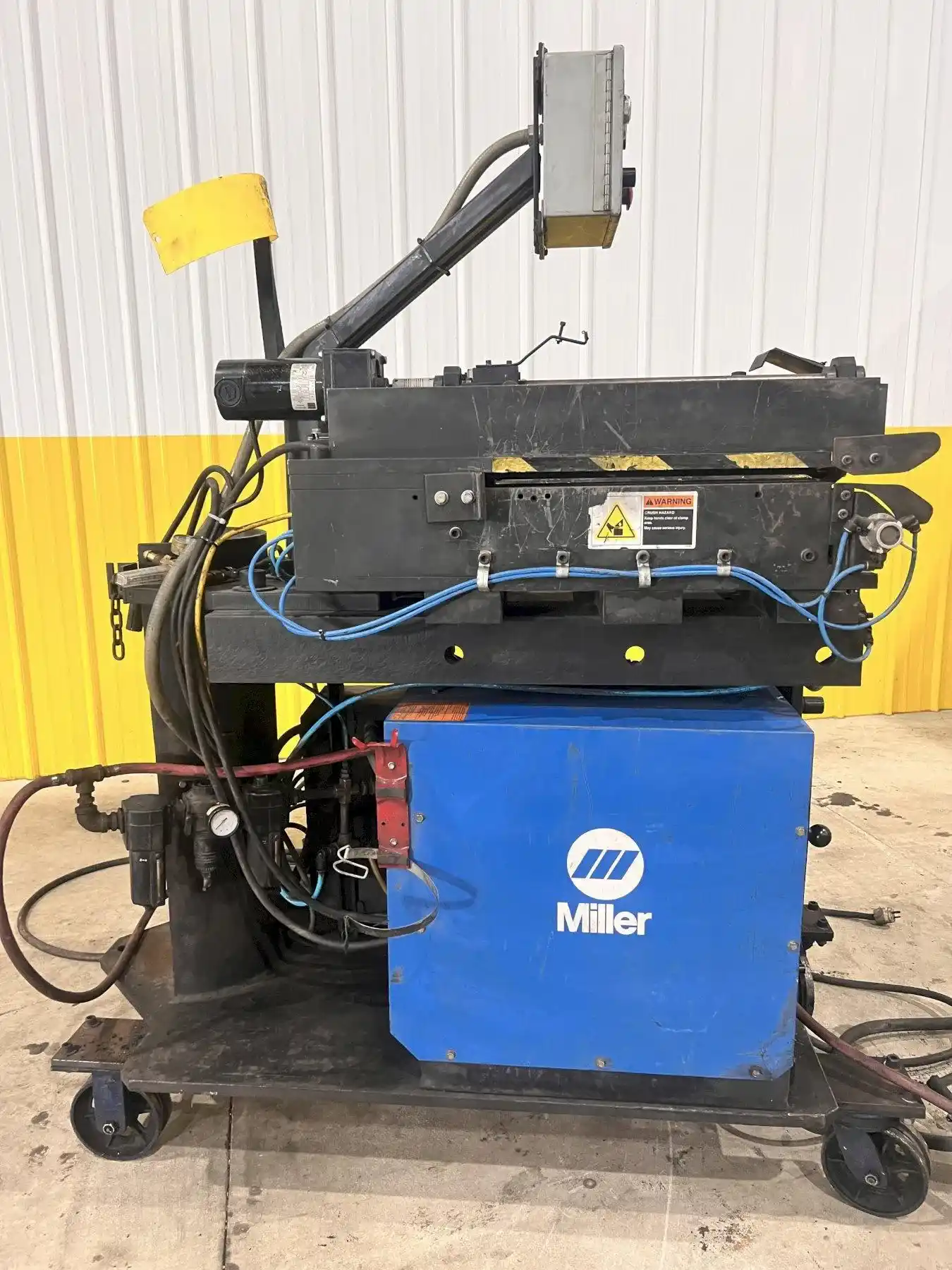
Most welders do not fail all at once. They give you a week or two of small complaints first, and the crews that catch those complaints early are usually the ones who avoid a machine going down in the middle of a job. Whether you run a Miller or Lincoln inverter in a fab shop or an engine-driven welder-generator on a pipeline right-of-way, the warning signs look similar. Here is what to watch for, what each one often points to, and what to write down before you pick up the phone.
The machine will not strike an arc
If the power light is on, the fan is running and nothing happens when you pull the trigger or touch down, start with the simple checks. Is the work clamp on clean, bare metal? Are the cable lugs tight and the cable undamaged along its whole length? Is the polarity right for the process you are running? Is the machine actually getting what it needs from the supply or the engine?
If all of that checks out and the machine still will not strike, the fault is probably inside: a control board, a contactor, a failed rectifier or a broken connection in the output circuit. That is a job for a technician with a meter and the service manual, not for swapping parts until something works.
Intermittent no-strike is the more dangerous version. A machine that works Monday and ignores you Tuesday has a loose connection or a part on its way out, and it will pick the worst moment to quit.
An arc that sputters, wanders or surges
A healthy arc sounds steady and even. If yours has started to pop, stutter or change while you weld, rule out the consumables and the setup first. A worn contact tip, a dirty liner, a poor ground, damp filler metal or a cable with a damaged stretch can all cause it.
Once those are cleared and the arc still wanders, look at the machine. Failing internal components, worn controls, a weak connection on the output side and, on engine-driven units, an engine that will not hold a steady speed are all common causes. Pay attention to whether the problem follows the engine or follows your welding settings. That one detail tells a technician where to start looking.
The engine runs fine but there is no output
This one belongs to engine-driven welder-generators. The engine starts, settles into a clean idle, and then you get no weld output, or no auxiliary power, or one but not the other. That points away from the engine and toward the generator end and the electrical side: a failed rectifier or excitation circuit, a tripped breaker, worn parts on the generator, or a bad connection somewhere between the generator and the panel.
Note exactly which outputs are dead. If the weld output is gone but the receptacles still work, say so. That split narrows the search quickly and saves diagnostic time.
Power that drops when you push the machine
A machine that is fine on light work and falls over when you ask for more is telling you something. On an engine-driven unit, a fuel or air restriction, a tired governor or a worn engine can all limit what it delivers once the load climbs. On the electrical side, loose or overheated connections and ageing components do the same thing.
Before you blame the welder, check whether the drop only happens on one circuit or at one site. A weak supply or an undersized extension cord can look exactly like a sick machine. If it happens everywhere, it is the machine.
Heat, smells and strange noises
Stop running the machine if you notice any of these. Pushing through is how a repairable board turns into a write-off.
- A hot-electronics or burnt insulation smell coming from the machine itself, not the work.
- A cooling fan that is loud, slow or stopped, or vents packed with grinding dust and debris.
- Thermal shutdowns on jobs that never used to cause them.
- Oil or fuel weeping from the engine, or smoke that was not there before.
- Knocking, rattling or a new vibration at idle or under load.
- Cables, lugs or connections that are too hot to touch.
What to note before you call
A good description saves time on both ends. You do not need to diagnose anything. You just need to describe what happened as clearly as you can. Before you call, jot down:
- The make, model and serial number from the data plate.
- What the machine was doing when the problem showed up: process, settings, and roughly how long it had been running.
- Whether the fault is constant or comes and goes, and whether heat makes it worse.
- Anything that changed recently, such as a move, a fuel fill, new cables, wet weather or a hard knock in transit.
- Which outputs still work and which do not.
- Any warning lights, breaker trips or unusual sounds. A short phone video of the symptom is worth a lot.
If the machine is a Miller or a Lincoln, tell us. We are an authorized warranty service provider for both, so the make and serial number help us look at your options properly from the start.
Our shop is at Unit 17 102, 11231-97 Ave in Grande Prairie, and our mobile team covers the Peace Country. Call (780) 978-9004 or email Rosset.cam@gmail.com to book an appointment before a small problem becomes a stopped job.
1st Choice Welder & Generator Service and Repair, (780) 978-9004
Call (780) 978-9004More articles
Restore or Replace? How to Decide on an Old Miller or Lincoln
Before you write off an older machine, find out what is actually wrong with it and what it would take to bring it back.
Why Welder Calibration Matters for Quality and Audits
A welder that looks fine can still be delivering something different from what the dial says.